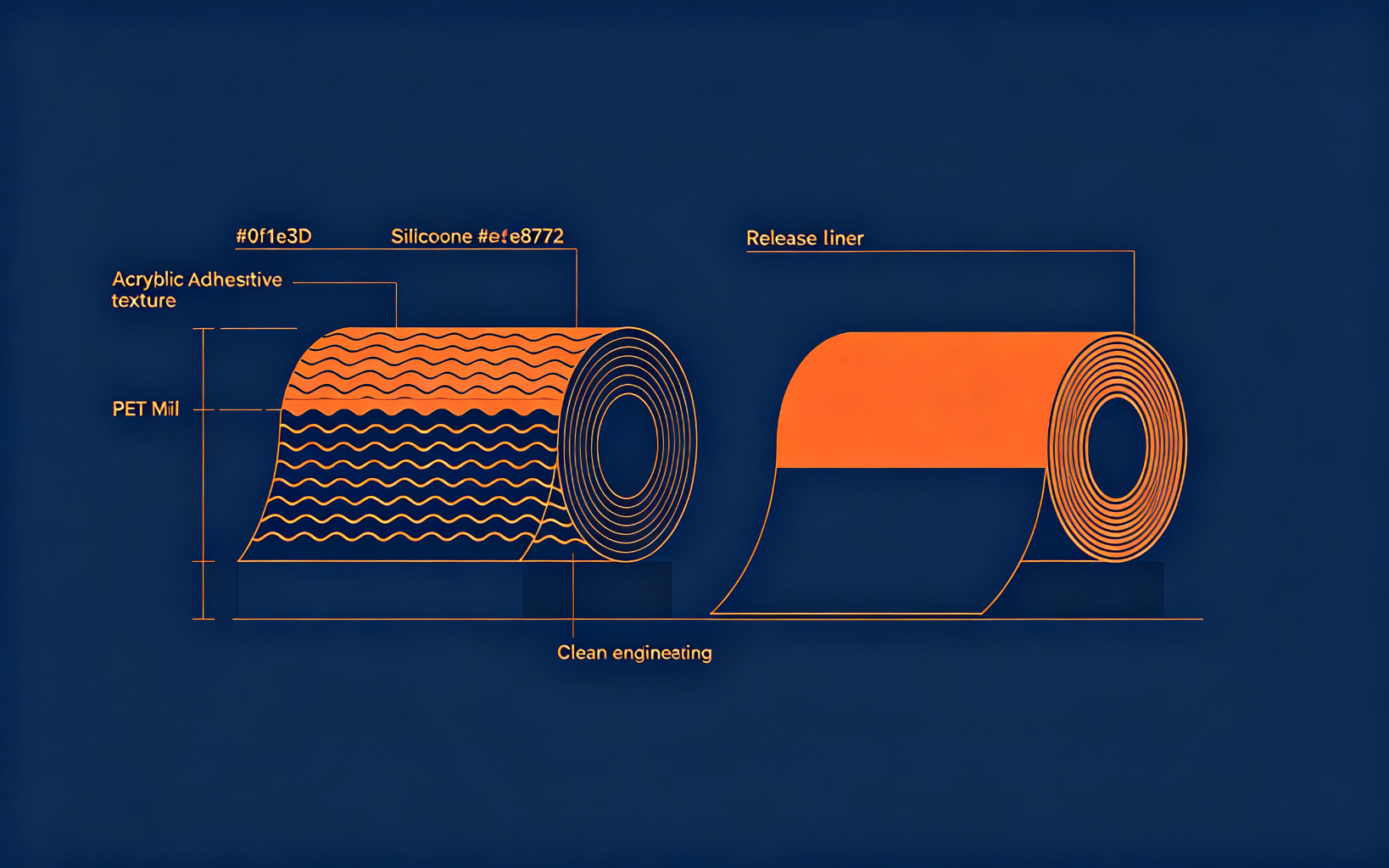
Acrylic vs Silicone Adhesive Tapes: How to Choose for Your Die-Cut Project
For engineers specifying a die-cut bonding component, the choice between acrylic and silicone adhesive is rarely decided by peel strength alone. The two chemistries behave very differently on low-surface-energy plastics, under thermal cycling, and when the bonded assembly has to survive decades in the field. This guide compares them across the parameters that actually drive field failure.
1. Surface energy: the first filter
Acrylic adhesives bond best to surfaces above ~38 dynes/cm (measured per ASTM D2578) — treated metals, glass, ABS, PC and PET. On HDPE, PP, powder-coated or silicone-rubber surfaces, standard acrylic will delaminate regardless of how high the initial peel number looks on the datasheet. Silicone adhesive tolerates low-energy surfaces down to ~28 dynes/cm and is the default choice for bonding silicone keypads, rubber gaskets or fluoropolymer films.
2. Temperature range
- Acrylic foam tapes (VHB family): continuous use typically −40 °C to +150 °C; peak exposure up to +200 °C for short cycles. Suitable for most electronics and appliance bonding.
- Silicone adhesive tapes: continuous use from −60 °C to +260 °C, with short-term peaks past +300 °C. Required for reflow soldering fixtures, heat-resistant labels, and engine-bay assemblies.
3. Where each one wins
Choose acrylic when: you are bonding standard engineering plastics or metals, cost matters, and the assembly lives in consumer-electronics or general industrial environments. Acrylic also offers cleaner aesthetics and better conformability to textured surfaces.
Choose silicone when: the substrate is low-surface-energy, the application sees high temperature or sterilisation cycles, or you need a release liner that itself is silicone-coated without contamination. Silicone's trade-off is higher cost, lower tack on high-energy surfaces, and the risk of silicone migration that can later interfere with painting.
If you are unsure, send us the substrate, operating temperature and a sample part. Our engineering team will recommend a specific adhesive and run a free die-cut prototype within 3–7 days.
Talk to an adhesive selection engineer →